
Why Story Keepers Exists (and Why It Isn’t Just “Intimate Theater”)
Op-ed by Avery Anderson
Let’s be clear about something up front: Story Keepers isn’t the only company doing intimate work. Tampa Bay has artists and theaters already pushing scale, proximity, and form—and that’s a good thing. This isn’t a land grab. It’s a lane choice.
Story Keepers exists for one reason that keeps coming back, no matter how many times we circle it: to ask why theater has to happen on a stage at all.
At its core, theater isn’t architecture. It’s storytelling. It’s a group of people agreeing—sometimes for 70 minutes, sometimes for a lifetime—to sit together and reckon with something human. The proscenium is a tool, not a requirement. And when the tool starts to dictate the story, it’s time to pick up a different one.
New Work, Not Just New Rooms
Story Keepers is built around new work and new artists—stories still forming, voices still finding their shape. Development isn’t a phase we rush through to get to the “real” thing; it is the thing. We’re interested in what happens when plays grow in spaces that aren’t neutral, when the walls have memory, when the audience isn’t hidden in the dark.
This is why we’re site-specific by design. Not as a novelty, but as a question:
What does this story become here?
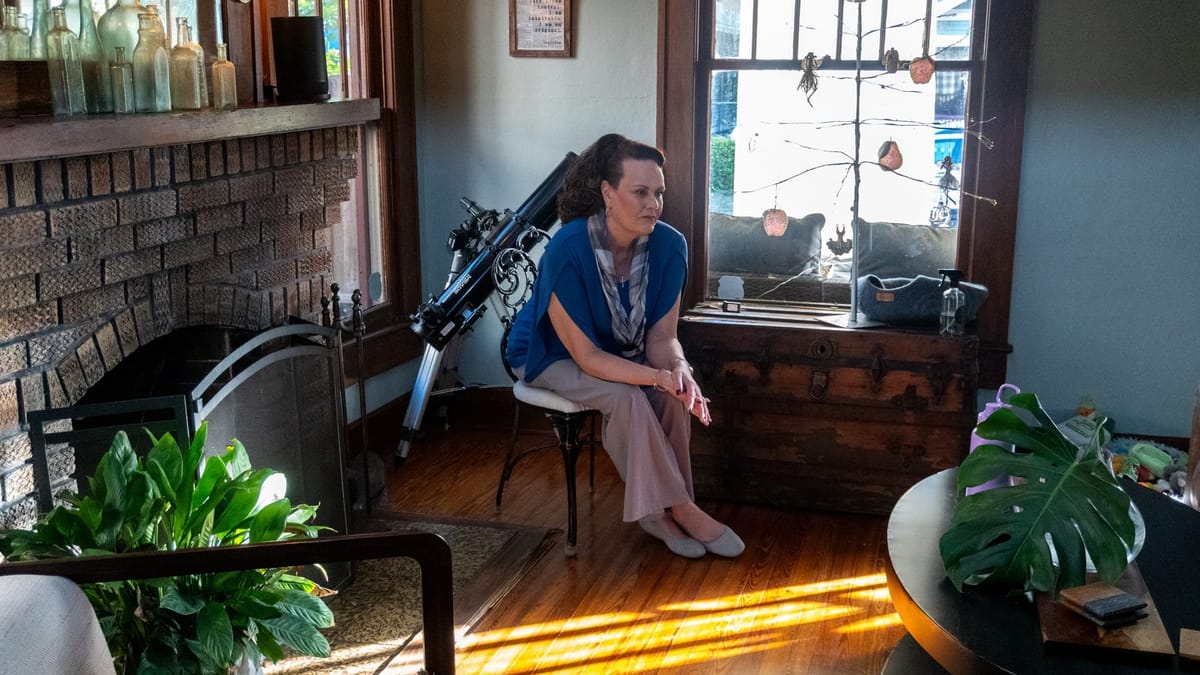
A living room isn’t just smaller than a theater—it’s more loaded. People have argued there. Cried there. Raised kids there. When a new play enters that space, it doesn’t arrive clean. It collides with real life. That friction is the point.
Why The Pink Unicorn
That’s also why our first production is The Pink Unicorn by Elise Forier Edie.
This is a play about a mother navigating her child’s coming out as gender nonconforming—but more specifically, it’s about parenting without a map. About love that wants to be right and isn’t always sure how. About what happens when the world’s loudest arguments show up at your own kitchen table.
This story does not benefit from distance. It needs breath, eye contact, the uncomfortable silence that only exists when you’re sitting close enough to feel it. In a traditional theater, the audience can watch. In a home, they have to be present.
That difference matters.
So What Are We Actually Doing?
Story Keepers is not here to replace existing theaters. We’re here to widen the definition of where theater can live—and who it’s for.
- New work first. Plays in development, artists in process, questions still open.
- Site-specific as storytelling, not spectacle. The space is part of the dramaturgy.
- Access through proximity. Smaller rooms, fewer barriers, more conversation.
- Artists as people, not products. Time, trust, and room to fail forward.
This isn’t about scaling up. It’s about scaling in.
The Bigger Question
Why does theater need a stage?
Sometimes it does. Sometimes the scale, the design, the ritual are exactly right. But sometimes a stage creates distance when the story needs closeness. Sometimes the fourth wall protects us from hearing what we actually need to hear.
Story Keepers exists to keep asking that question—and to build work that doesn’t assume the answer.
We’re starting in homes across St. Petersburg because homes are where stories already live. We’re starting with The Pink Unicorn because it demands listening, not certainty. And we’re starting small because trust is built that way.
Theater doesn’t begin when the lights go down. It begins when people sit together and agree to listen.
Pull up a chair.