
What Happens When Your Job Owns You
by Avery Anderson
The first thing JOB makes clear is that this is not a therapy session.
It’s a negotiation.
Jane wants her job back. Loyd has the authority to decide whether she’s ready. That’s the entire premise—two people, one room, and a future hanging on the word fit. But as Urbanite Theatre opens the regional premiere of JOB this January, it becomes clear that what’s really on trial isn’t Jane’s mental health.
It’s the system that needs her functional enough to return.
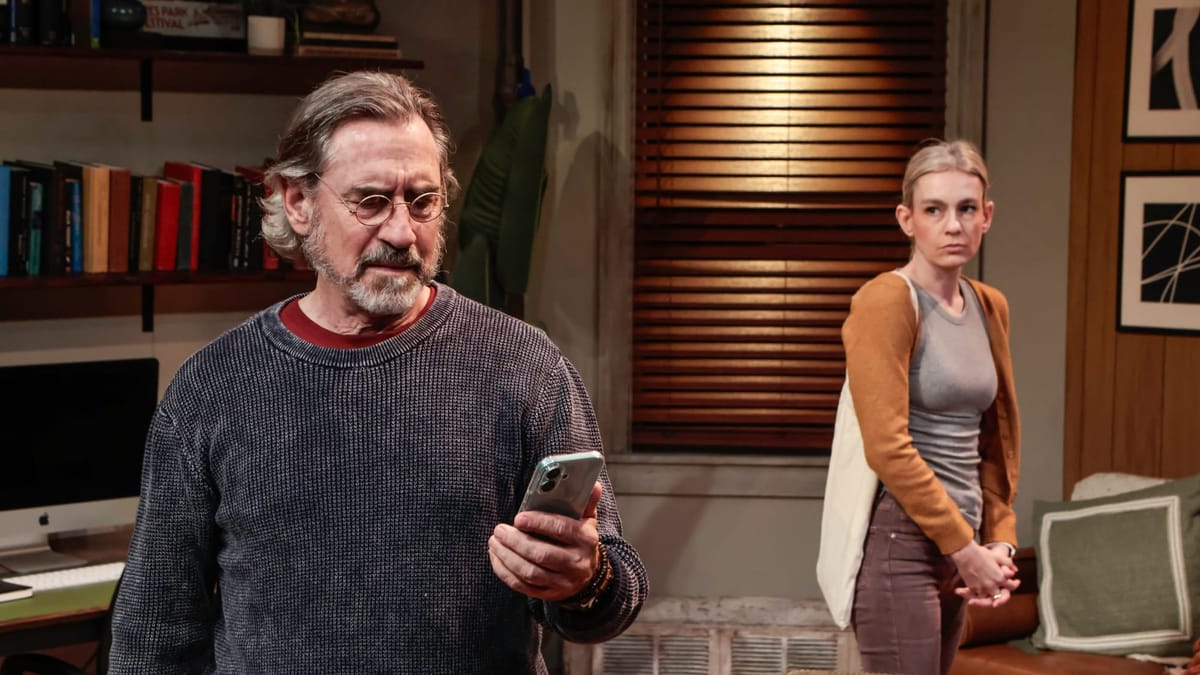
Written by Max Wolf Friedlich, JOB is set in January 2020, just before the world learned how fragile its definitions of normal really were. Jane, a rising Big Tech employee, has been placed on mandatory leave after a workplace incident goes viral. Loyd, her assigned therapist—older, relaxed, suspicious of the world she’s desperate to reenter—must determine whether she can go back.
That’s it. No spectacle. No ensemble. Just a conversation that tightens until it feels almost unbearable.
Producing Artistic Director Summer Wallace puts it plainly: “It’s a brilliant thriller that holds a mirror up to our tech-saturated, generationally divided world. This piece, like many of the works we produce, is bound to spark new conversations after the curtain closes.”
That mirror feels sharper now than it did when JOB first premiered off-Broadway—twice, to sold-out houses—before landing on Broadway in 2024. In 2026, the questions it raises are no longer theoretical. They’re policy. They’re HR meetings. They’re push notifications.
The Therapy Room as Battleground
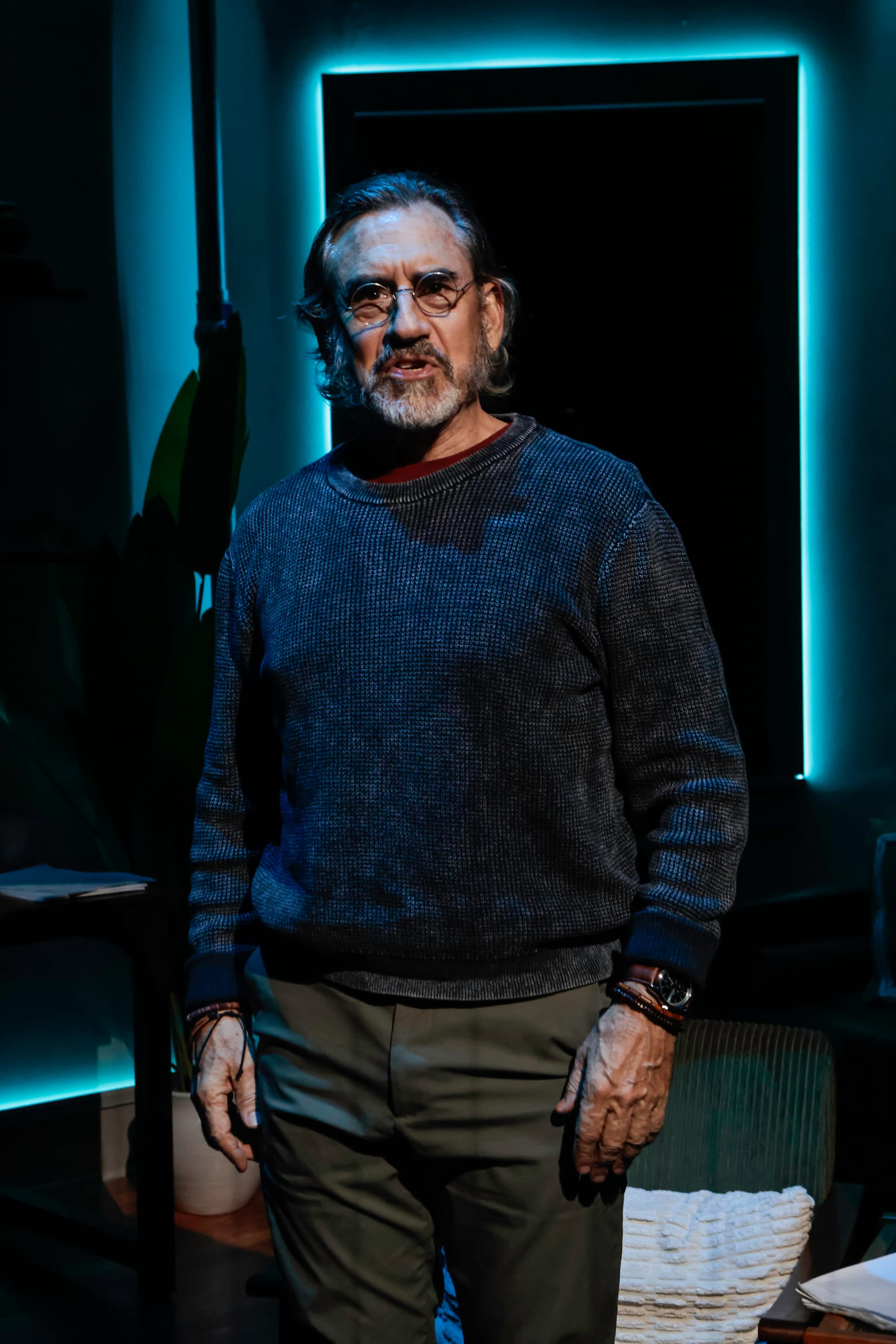
The premise is deceptively simple. Jane, a young professional in Big Tech, needs clearance to return to work after a viral incident derailed her career. Loyd, her assigned therapist, is in his 60s—described as someone who “wouldn’t be out of place at a Grateful Dead show.” He suspects her job may be doing more harm than good.
That’s it. Two people. One room. Eighty minutes.
And yet JOB manages to feel vast—because the room is crowded with everything neither character says out loud: generational power shifts, the monetization of outrage, the performance of mental wellness, the quiet violence of systems that demand productivity at any cost.
The New York Times called the play “Nimble… filled with so many ideas that it seems to expand beyond the walls.” Vulture went further, labeling it “80 minutes of pretty much pure tension. A slick, cleverly crafted droptower ride.”
Urbanite leans into that compression. Directed by Meg Gilbert, the Sarasota production stars Casey Wortmann as Jane and David Breitbarth—making his Urbanite debut—as Loyd. The intimacy of the space matters here. There’s no distance between the audience and the discomfort. No fourth wall thick enough to muffle recognition.
Why This Play, Why Now
It’s tempting to frame JOB as a “pandemic-era play,” but that undersells its relevance. The pandemic didn’t create the conditions this play examines—it exposed them.
Since 2020, our relationship to work has fractured. Remote labor blurred boundaries. Tech companies ballooned, then imploded. Therapy apps proliferated. Burnout became a brand. Being “online” stopped being optional.
In that context, JOB asks an unsettling question: What do we owe each other in systems designed to extract as much as possible—and who gets to decide when someone is “well enough” to re-enter the machine?
For Sarasota audiences, that question hits locally. This is a region increasingly shaped by remote workers, tech transplants, and gig-economy labor—people who may live here physically while working elsewhere digitally. The play’s San Francisco setting feels less like a geographic choice and more like a psychological state.
Urbanite has built its reputation on stories that don’t let audiences off the hook, and JOB fits squarely within that mission. The theater describes its work as “visceral, shared experiences” rooted in “daring honesty” and the “powerful connectivity of an intimate space.” In JOB, that intimacy becomes part of the ethics of the evening. You’re not just watching a conversation—you’re implicated in it.
 Avery Anderson
No Easy Answers, No Clean Exit
What JOB refuses to offer is resolution. There’s no neat moral bow. The final blackout doesn’t tell you who’s right. It leaves you sifting through the wreckage—your own assumptions included.
That ambiguity is the point.
This isn’t a play about villains and victims. It’s about systems that reward harm while pretending to heal it. About how quickly empathy can become surveillance. About what happens when the language of care is co-opted by institutions that need you functional, not whole.
Urbanite’s choice to stage JOB now feels less like programming and more like civic engagement. In a time when conversations about mental health are louder than ever—but often flattened into slogans—this production insists on complexity. On discomfort. On staying with the question a little longer than feels polite.
The show runs January 9 through February 15. This is not escapist theater. It’s theater that knows exactly where we are.
And maybe, uncomfortably, where we’re headed.
JOB
By Max Wolf Friedlich
Directed by Meg Gilbert
January 9 – February 15, 2026
Urbanite Theatre
Tickets: $44 standard | $30 under 40 | $5 students