The Ghost in the Machine: Suzy Eddie Izzard’s Radical, Bare-Knuckle 'Hamlet'
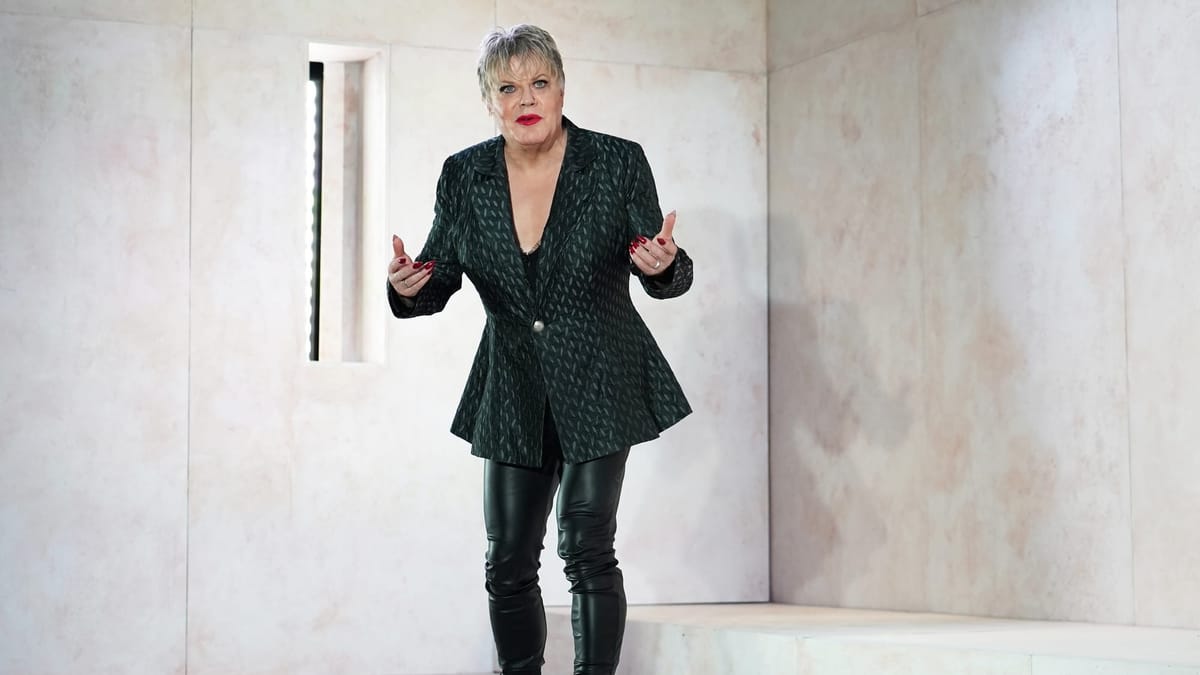
One performer, 23 characters, and a fight for the "thickness of silence."
In the age of the $200 million Marvel spectacle and the relentless, dopamine-chasing scroll of TikTok, the boldest thing an artist can do is stand on a bare stage and ask you to use your brain.
Suzy Eddie Izzard is currently betting 65,000 tickets—and counting—that you’re up for the challenge.
When The Tragedy of Hamlet opens at the Straz Center’s Jaeb Theater on March 13, there will be no high-tech wizardry. There will be no digital projections, no period-accurate doublet and hose, and no troupe of brooding Danish royals. There will only be Suzy, a lifetime of street-performing grit, and a story that has been "marbleized" by 400 years of academic reverence—an institutional gloss she is hell-bent on scraping off.
From the Streets to the Stratosphere
For those who know Suzy Eddie Izzard primarily as the world-conquering stand-up comedian who ran 27 marathons in 27 days or filled Madison Square Garden with surreal riffs on history, this Hamlet might seem like a departure. In reality, it’s a homecoming.
Before the global tours and Tony nominations, Suzy was a street performer in London, honing the ability to hold a crowd with nothing but a sword and a story. She has spent the last year proving that this minimalist approach to the classics isn't just a gimmick—it’s a phenomenon. The production arrives in Tampa trailing a wake of critical acclaim from Los Angeles, Chicago, and New York, having already logged over 225 performances.
"We have sold 65,000 tickets and we're up to performance 225 now in here in Toronto," Suzy says. "So it's going very well... there's something unusual that we're doing with it because we're trying to perform to the audience rather than at the audience."
The "No Flying Cars" Philosophy
In a cultural landscape often obsessed with "spectacle and flash," Suzy is pivoting toward the primitive. If you are expecting the theatrical equivalent of a summer blockbuster—complete with the stagecraft version of a flying car or CGI-heavy wizardry—you are in the wrong seat. There are no props. If there’s a sword fight, she’s fighting herself. If there’s a ghost, your imagination is the one providing the translucent fog.
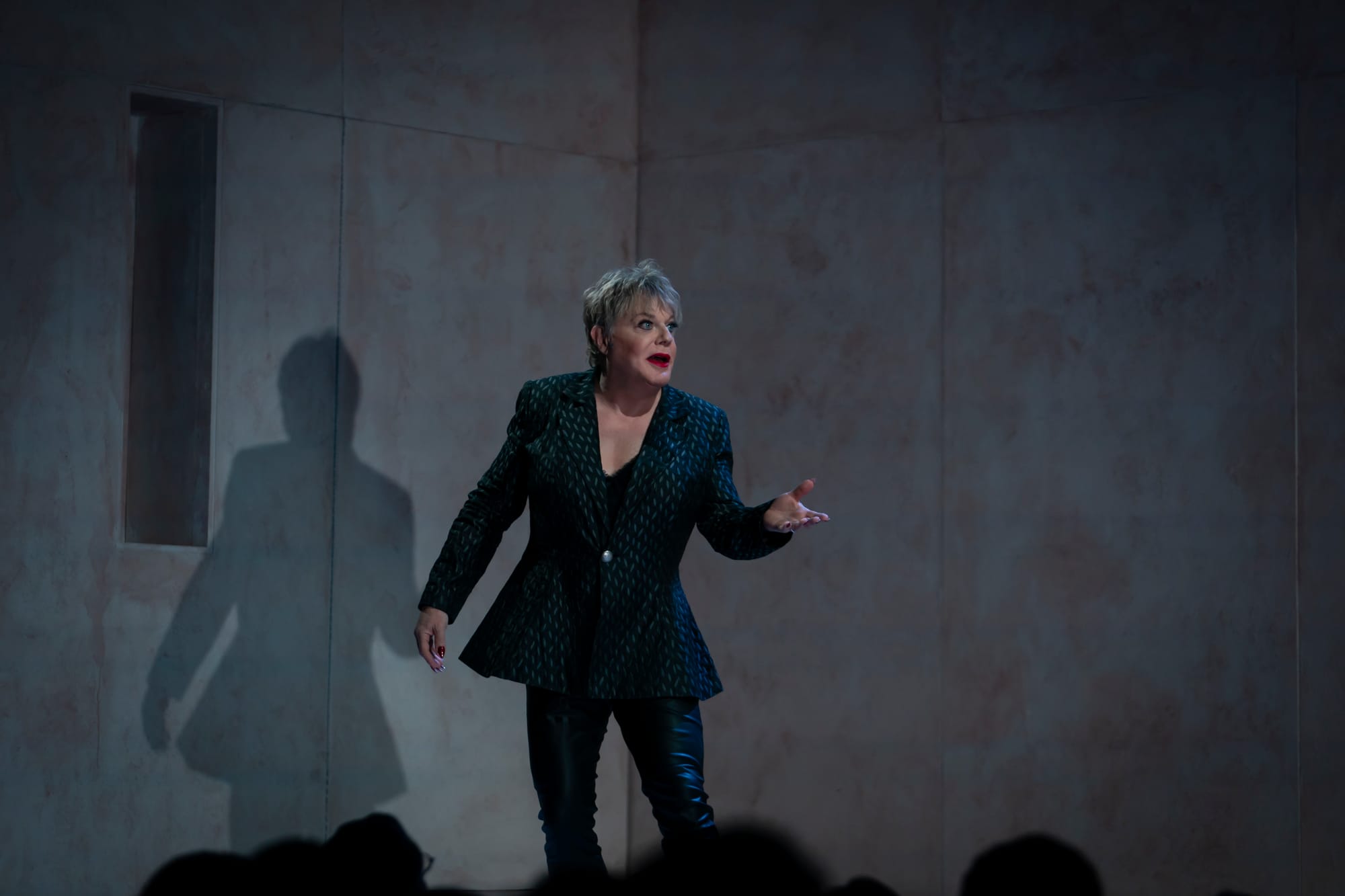
"Some people don't get it," Suzy admits. "They say where's all the other people? Where's the flying cars? Where's all the this and the that? And they're going, 'Well, no, this is very visceral, very gut level.' If you did think there was going to be some flying car in it, it's not happening here."
To understand why this matters in 2026, you have to look back to the "strolling players" of the 1500s. Suzy argues that Shakespeare’s actors didn’t go to drama school; they were performers who had to keep up with university-educated rivals by being more visceral, more grounded, and more human.
"I was a street performer for four years," Suzy explains. "So what I can bring to this performance of Hamlet is something different... It is a story being told to an audience just like it was when it was first done, Just like the cave dwellers when they had fires."
Fighting for the Silence
There is a specific tension in modern theater. We are an audience of the "doom scroll," our attention spans splintered by notifications. How do you hold a room for the duration of a Shakespearean tragedy with nothing but your voice and a few micro-adjustments in posture?
For Suzy, the answer lies in the physics of the room. She views comedy and drama as something with vastly different goals for the air in the theater.
"The one key thing I find is that in comedy I fight for the thickness of the laughter and in drama I fight for the thickness of the silence," she says. "And that's an interesting difference that you want to perform in such a way that you earn your pauses and in the pause you can hear that pin dropping—pins would be embarrassed to drop—that's what you want to be fighting for."
It is an aggressive form of intimacy. She isn't performing at the Tampa audience; she’s performing to them, ignoring the "fourth wall" which she correctly notes didn't even exist until the late 1800s. If you cough, she’ll hear it. If you lean in, she’ll pull you further.
Why Tampa, Why Now?
Florida is often characterized as a cultural battlefield, a place where the arts are frequently caught in the crosshairs of civic debate. To some, bringing a gender-fluid, genre-defying solo Shakespeare show to the Gulf Coast might seem like a statement. To Suzy, it’s just about finding the "oasis."
"If you have a good theater in a town or city anywhere in the world that can be a complete oasis of positive performance style of of imagination of open-minded thinking and creativity," Suzy says. "It doesn't have to be the same as whoever is elected at that point in the civic council of that thing. It's a theater."
The Straz Center has long served as that oasis for Tampa Bay, and the choice of the Jaeb Theater—an intimate space—is deliberate. In a larger house, the "thickness of the silence" might dissipate. Here, it can settle.
Suzy is playing 23 characters, though she focuses on eight "anchors." It is a marathon of the mind, a "take no prisoners" approach to the text that refuses to treat Shakespeare as "spinach theater"—something that’s good for you but tastes terrible.
"I just feel sure that he did not write plays so that people could sit there going 'I don't know what he's on about but apparently it's good because in 400 years time they're going to do study packs on this,'" she says.
Instead, she wants you on the edge of your seat, wondering what happens next to a family and a country tearing itself apart. In 2026, a story about internal rot and the struggle for truth feels less like a classic and more like the morning news.
The Invitation
As the lights go down in the Jaeb this March, there will be a moment of absolute stillness. Suzy Eddie Izzard will be waiting for the silence to thicken. She isn't asking for your reverence; she’s asking for your 30 percent—the 30 percent of the performance that exists only in the audience's imagination.
It is a rare invitation to stop scrolling, stop consuming, and start co-creating.
"I have always gravitated towards playing complex and challenging characters and Hamlet is the ultimate," Suzy says. "This is a production for everyone, a timeless drama with an accidental hero."
The question is: Are you ready to let the pins be embarrassed to drop?
Details: The Tragedy of Hamlet runs March 13–16, 2026, at the Jaeb Theater, Straz Center. Tickets are available at strazcenter.org.
 Avery Anderson
 Avery Anderson