Podcast: Samantha Marti Parisi Isn’t Afraid of the Netless Leap

There’s a moment in the conversation when Samantha Marti Parisi describes one-woman shows as “flying trapeze without a net.”
No understudy.
No scene partner.
No one to catch you if your footing slips.
It’s not a metaphor she uses lightly. It’s a decision — one she’s been making more often.
Parisi has spent years embedded in Tampa Bay’s theater ecosystem: performing, collaborating, raising a family, stepping away when life required it, then stepping back in with a clarity that only time gives you. And lately, that clarity has pointed her toward stories that demand intimacy, risk, and personal accountability.
Finding the Work That Fits
Parisi didn’t follow the traditional conservatory-to-career pipeline. She returned to acting after raising her children, initially looking for “a creative outlet” — something beyond carpools, PTA meetings, and dinner schedules.
Then she was cast as the lead.
“Age is relative in community theater,” she laughs — but the experience stuck. Acting wasn’t something she was dabbling in. It was something she was choosing.
That choice has sharpened over time, especially as roles for women of a certain age grow fewer — and more predictable.
“If I want to keep doing the acting side of theater,” Parisi says, “then maybe I do need to explore other opportunities.”
So she did.
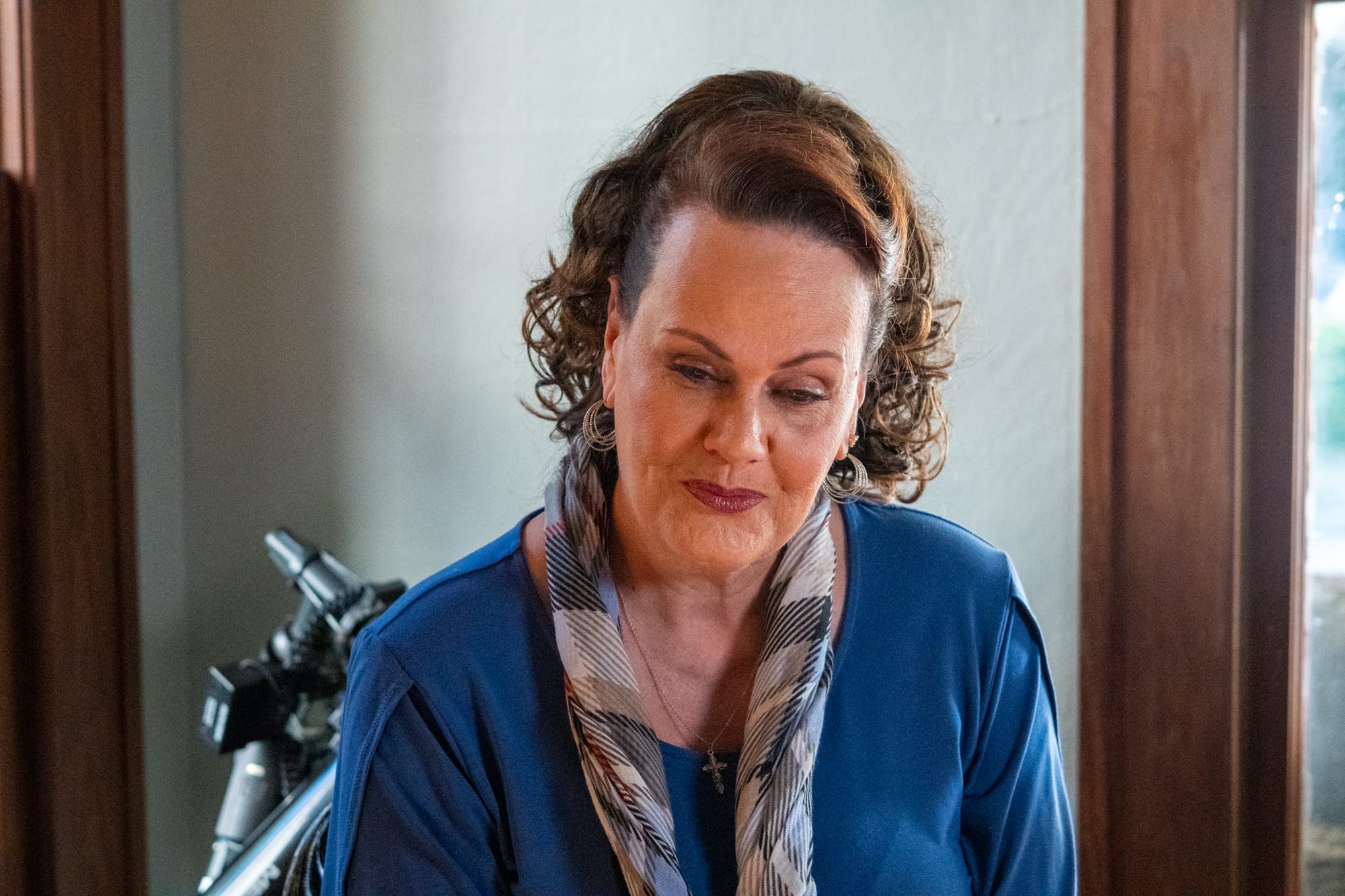
The Power — and Weight — of Standing Alone
Her recent work has leaned increasingly toward solo performance: Molly Ivins, Goddess of the Hunt, and now The Pink Unicorn, produced by Story Keepers.
Each project strips away safety nets.
“One-person shows are terrifying,” Parisi says plainly. “It’s all you. Your memory. Your rhythm. Your ability to keep the audience with you.”
To manage that, she builds physical and emotional “touch points” — anchors that bring her back when the story shifts or the space changes. It’s part performance technique, part mental discipline.
“I do this as a practice,” she explains. “I want to keep my mind sharp. I don’t ever want someone else to tell me it’s time to stop doing theater.”
Why The Pink Unicorn Landed
When The Pink Unicorn crossed her path, Parisi recognized something rare: a script that trusted its audience.
The play centers on Tricia Lee, a conservative Texas mother navigating her child’s coming-out as genderqueer. It doesn’t rush toward redemption. It doesn’t clean up the discomfort.
“This mom is real and messy,” Parisi says. “She says the things that any parent would say. She’s not comfortable. She’s not perfect.”
That imperfection was the invitation.
“She’s a bridge,” Parisi adds. “Between where people are — and where they could be, if they led with curiosity.”
 Avery Anderson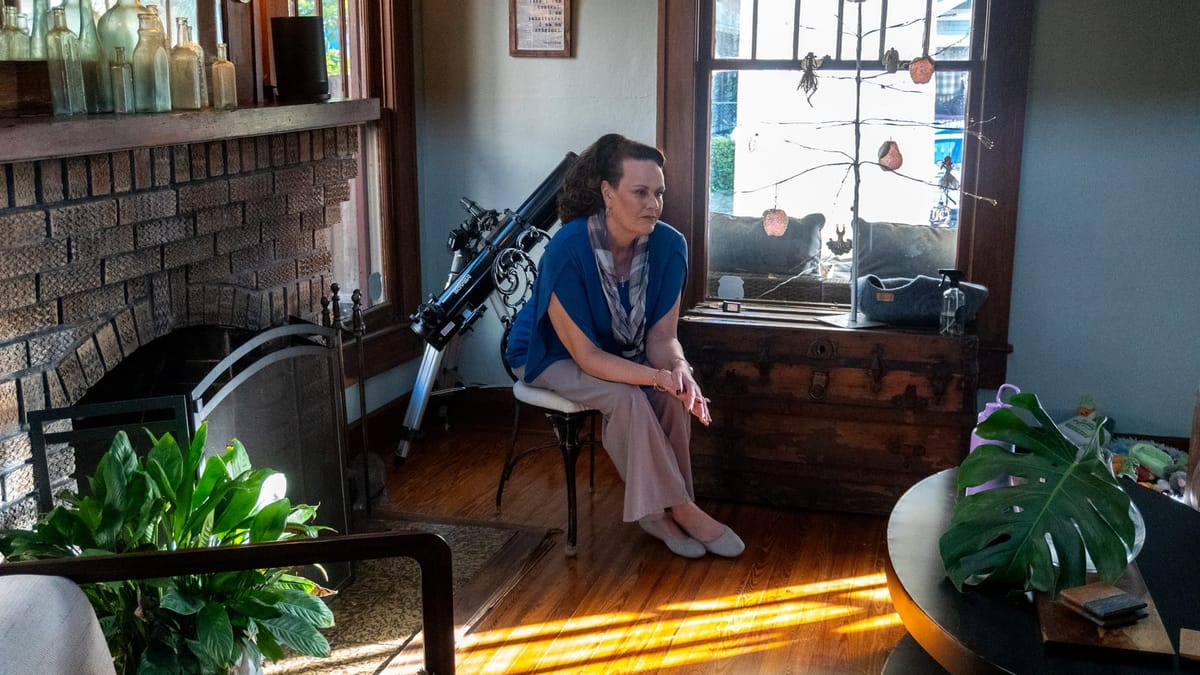
A Story That Belongs in the Room
Equally important to Parisi is where the story is told.
Rather than a traditional theater, The Pink Unicorn unfolds in living rooms, backyards, galleries — places where audiences sit close enough to be seen.
“This feels like a story someone would tell at a church social or a PTA meeting,” she says. “You can imagine it starting casually — and suddenly you’re in it.”
Each performance is different. Seating shifts. Sightlines change. The audience becomes visible — and participatory — simply by being present.
“You adjust naturally,” Parisi says. “You see someone nodding. Leaning in. You feel that exchange.”
The Work Ahead
Parisi is already looking forward.
She’s developing a series of small-scale solo pieces spotlighting overlooked women in history — stories designed for libraries, museums, historical societies, and community groups.
“It feels a little rebellious right now,” she says, “to tell stories that are being erased or forgotten.”
That word — rebellious — fits.
So does curious.
In a cultural moment obsessed with certainty, Parisi’s work insists on something quieter and braver: staying open, stepping forward without a net, and trusting that the story — told honestly and up close — will do its work.
🎧 Listen to the full conversation
Samantha Marti Parisi joins Tampa Bay Arts Passport to talk about solo performance, motherhood, memory, and why curiosity might be the most radical artistic tool we have right now.
Explore More Episodes of the Arts Passport Podcast
 Avery Anderson