
Drawing the Dark: Karla Hartley on Finding Beauty in the Conflict of ‘Asher Lev’
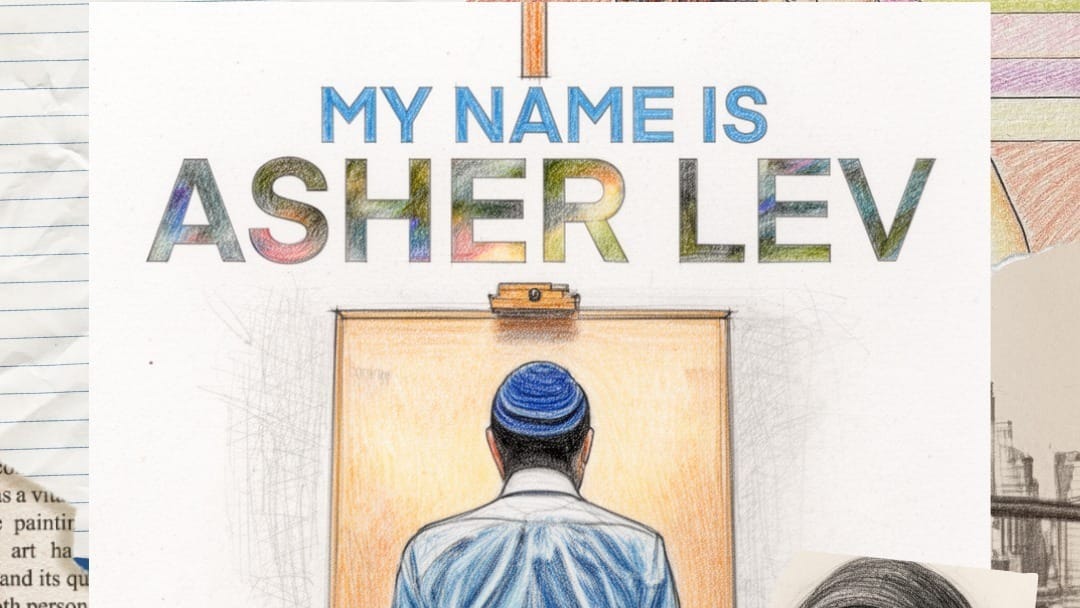
Why the story of a young artist defying tradition is the "breath of fresh air" we need in a discordant world.
By Avery Anderson
Karla Hartley has a confession: her parents were supportive.
In a play like My Name is Asher Lev, where the titular character is locked in a combative, holy war with his parents over his "calling" to paint, this might seem like a point of divergence. But for Hartley, who is directing the upcoming production at Stageworks Theatre, the connection to Chaim Potok’s classic story isn’t about the fight—it’s about the "fish out of water" feeling of being the only one in a family with an artistic soul.
"To branch out into something that nobody in your family has ever done before, but you really feel like it is what you were meant to be doing in the world? It can be challenging," Hartley says.
Hartley first fell in love with Aaron Posner’s stage adaptation 15 years ago while stage-managing a production at American Stage. Now, stepping into the director’s chair, she finds the prose has only grown more relevant. In a world she describes as "dark" and lacking "kindness," the story of a young Hassidic man torn between his faith and his genius offers a rare opportunity to seek out beauty in the discord.
Universal Faiths and Family Expectations
While My Name is Asher Lev is deeply rooted in the Jewish experience—following Asher as his artistic promise threatens to alienate him from his community—Hartley resists labeling it a "Jewish play".
"I think it’s universal enough that the religious aspects of it, you can tie into that whether you’re Jewish, Christian, Muslim, Hindu," she explains. "We all have dealt with parents and their expectations. And oftentimes it’s very hard to defy those expectations".
The play asks a difficult question: How do you maintain your personhood and destiny while being mindful of the loved ones you might hurt along the way?. It’s a tension Hartley relates to personally. Her father, a deacon in the church with a loading-dock background, sought professional advice to understand if his daughter’s talent was worth the struggle of an arts career. He ultimately supported her, but that initial "calling"—and the fear of it being unacceptable to the family—remains the play's driving engine.
A "Slow Rollout" in a Fast World
In an era of TikTok-shortened attention spans, Asher Lev is a deliberate outlier. The script is lean—barely 40 pages—but it demands a patient audience for its 85-minute "slow rollout".
"It’s a play that requires patience," Hartley notes. "But if you can stay with it, it’s so, so meaningful".
The production features a tight three-person ensemble: Nicole Jeannine, Landon Green, and Jaryn McCann as Asher. Hartley is particularly vocal about McCann, a performer who doesn’t fit the "traditional leading man" mold.
"He’s underestimated by the community in so many ways because he doesn’t have a certain look," Hartley says. "I think it will change the way people look at him".
Finding the Light
The play doesn’t offer easy answers. In one scene, Asher’s mother asks him why he won't just draw "pretty flowers". His response—it’s not a happy world—is a sentiment Hartley thinks modern audiences will recognize.
"There’s a sense of embracing the truth of your reality while holding on to your optimism and your version of beauty," Hartley says. "I want [audiences] to leave this place with an understanding... that beauty can be found in the world even when that world seems dark".
For Hartley, the process in the rehearsal room has been the antidote to that darkness—a joyful, secure space filled with artists doing "solid and meaningful" work.
"These are the moments that I sit with and say, this is why I’m called to do what it is that I do," she says.
Go See It: My Name is Asher Lev
Now through March 5 - 22
Stageworks Theatre