
Chalk Dust and Cannon Fire: A Chalk Mural for the Tampa Bay Bucs
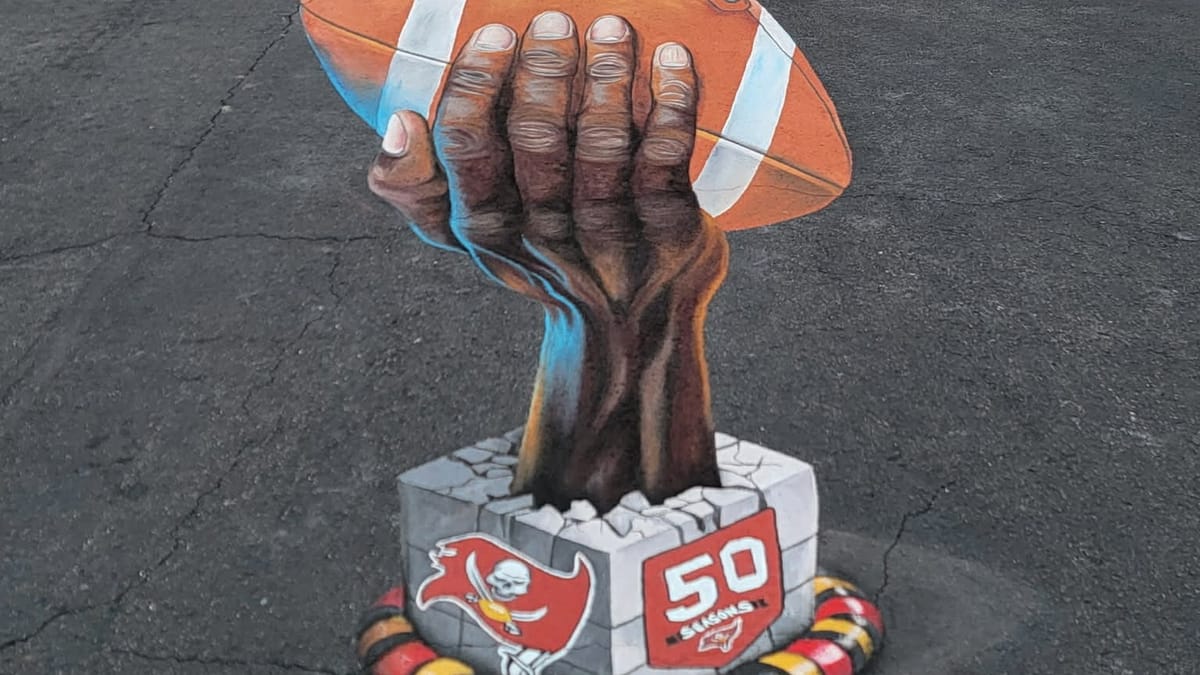
by Avery Anderson and Adam Bounds
In Tampa, we build pirate ships inside football stadiums.
So commissioning a giant, hyper-detailed chalk mural for Black History Month at Tampa Bay Buccaneers headquarters? Honestly. On brand.
But what makes this one interesting isn’t just that it exists. It’s who made it — and how intentionally she approached it.
When Laura Thomas got the call, it wasn’t vague. The organization wanted something that honored Black History Month, incorporated football, and reflected the Tampa Bay community.
 Avery Anderson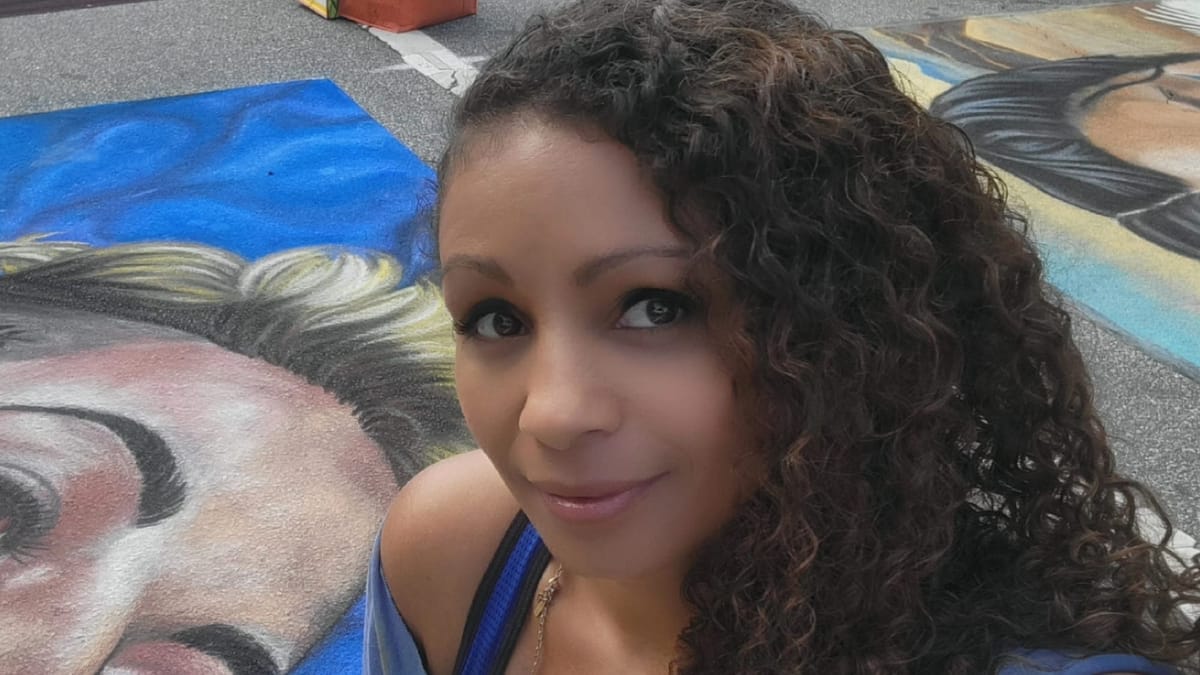
No pressure. Just identity, history, civic pride — and maybe don’t smudge it.
“It’s for Black History Month, but I wanted it to be something that would help… kind of make everybody proud,” Thomas said. “You know, everyone can enjoy it. Appreciate it.”
That line feels particularly Tampa. This is a city that contains multigenerational Black neighborhoods, shiny new condos, die-hard Bucs fans, and people who still argue about which Cuban sandwich is correct. If you’re going to make a piece that lives at One Buccaneer Place, it has to speak to more than one audience.
Thomas understood that assignment.
“The organization reached out to me, wanting to do this for Black History Month,” she said. “And I was very excited and honored that they asked me to do it.”
Excited. Honored. Also: strategic.
She didn’t just sketch one idea and hope for the best. She created multiple designs and submitted them. The team chose their final draft pick.
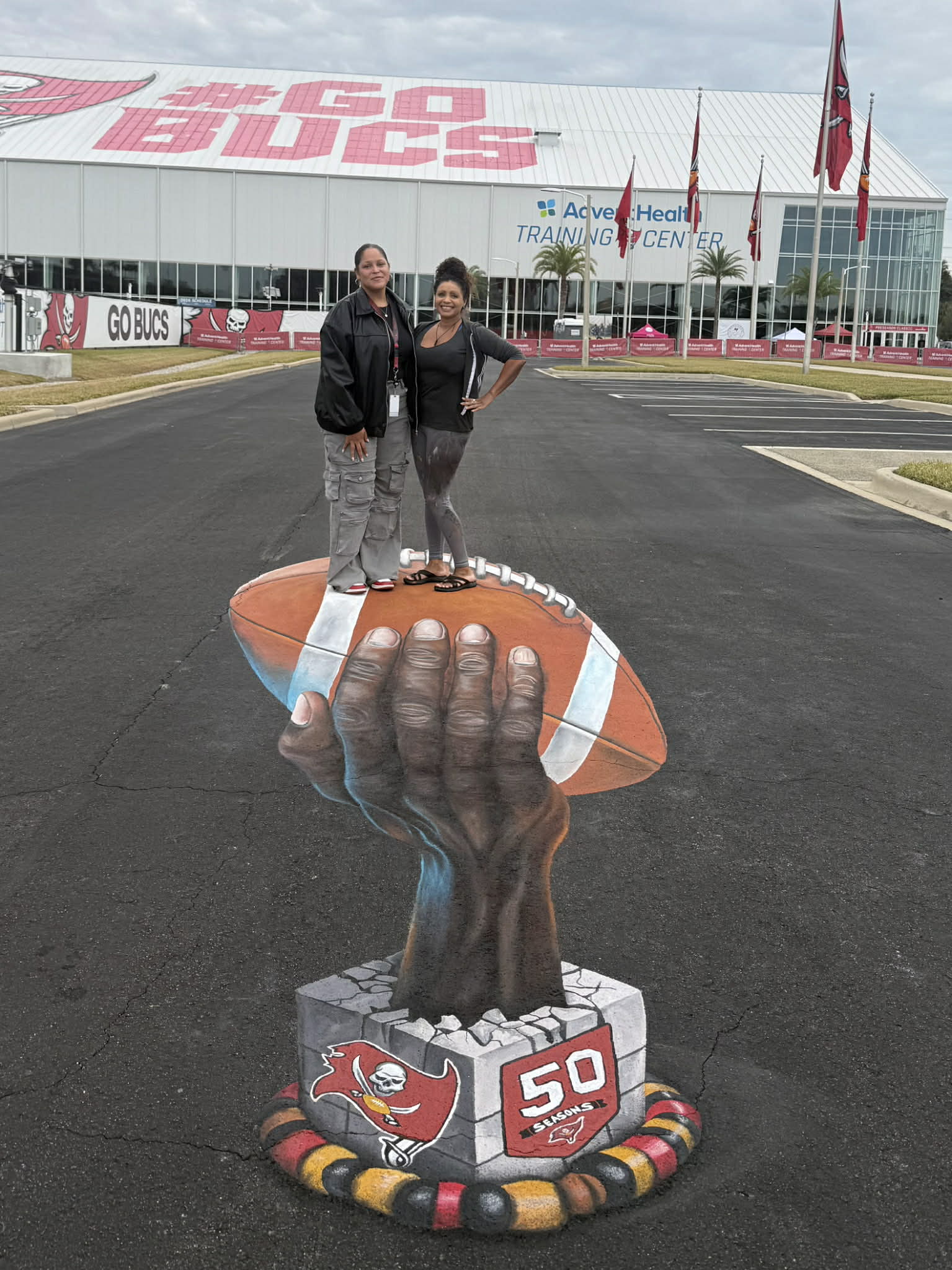
“I’m super glad that they did,” she said. “And I think it’s a fun piece and people are going to really enjoy it.”
Fun is doing a lot of work here. Because let’s be real: conversations about race in America are rarely described as “fun.” But Tampa’s cultural language has always leaned toward spectacle — Gasparilla beads, boat parades, cannon blasts, oversized pirate flags. If you’re going to make an impact in this town, subtle isn’t always the move.
Chalk art is inherently theatrical. It demands attention. It creates illusion. It makes people stop mid-scroll and mid-stride.
And it disappears.
“I always want to have the most meaning or impact for whatever the event or theme is,” Thomas said. “I always want to do my best with it, and always knowing that when it’s done, it’ll eventually be gone.”
There’s something very Tampa about that too. This is a city constantly reinventing itself. Buildings come down. Murals rotate. Neighborhoods shift. We memorialize in public — and then we build over it.
Thomas knows the clock is built into her medium.
“I hope they will forever be in awe of it, and obviously take many photos so they can look back and enjoy it,” she said. “And I hope it’s something that they feel proud that they had here, and had created and had done.”
That phrasing stands out: had created and had done. Not just “displayed.” Not just “posted.” Created. Done.
Sports franchises are some of the most powerful cultural brands in the city. When they choose to commission a local artist to interpret Black history on their own property — not tucked into a social media tile, not relegated to a halftime announcement — that’s a decision about visibility.
It says this story belongs here.
At a training facility where million-dollar contracts are negotiated and Sunday lineups are built, chalk dust might feel small. But culture rarely changes because of one massive gesture. It shifts through visible, repeated choices.
And in a city that loves its cannons loud and its visuals bold, sometimes the most radical thing is simple: make something beautiful. Put it in the open. Let people stand in front of it.
Take the photo.
Let it fade.
And remember that it was here.